JA-110ST
Bus combined smoke and temperature detector
When it detects smoke or a high temperature, it starts flashing and passes the alarm on to the system at the same time.
Product line
- JABLOTRON 100+
- JABLOTRON Mercury
Compatibility
JA-100K, JA-101K, JA-106K, JA-103K, JA-107K, JA-108K, JA-102K
Check compatibilityKey specifications
- Power
- from control panel digital bus 12 V (9…15 V)
- Current consumption in standby mode
- 5 mA
- Current consumption for cable selection
- 10 mA
- Dimensions
- diameter 126 mm, height 50 mm
- Weight
- 143 g
- Smoke detection
- optical light scattering
- Smoke detector sensitivity
- m = 0.11 ÷ 0.13 dB/m pursuant to EN 54-7
Basic description
The detector picks up a fire as it starts and gives you time to respond or to evacuate in good time. Besides passing the alarm on to the system, it also signals the fire by flashing the LED on the detector itself.
- Fire signalled by the LED flashing on the detector and also by the system keypads and sirens
- Remote alerting in MyJABLOTRON and to the Alarm Receiving Centre
- Thanks to the heat sensor, it also reacts to a fire without dense smoke (flammable liquids and the like)
Why choose this product
Where the detector can be used
Smoke detection is intended for interiors without increased dust levels, which can cause false alarms. If necessary, the reaction to smoke can be disabled.
- Detection of smoke and of high temperature in flats and houses
- Optionally a slower reaction to heat only, or both conditions required at the same time
- In enclosed interiors where smoke rises all the way to the ceiling
Placement
The number of detectors depends on the size and layout of the flat or house. The minimum is one detector on the escape route from the flat, plus one more in another part in a flat over 150 m². In a multi-storey flat or family house, a detector belongs above the stairwell as well. Ideally, cover all the rooms where people sleep too.
- If possible the centre of the ceiling, where air circulation carries the smoke
- Parts of a room divided by shelving or partitions reaching almost to the ceiling, each as a separate room
- A narrow space, where the detector belongs in the middle third of its width
Where not to put the detector
Do not place the detector where poor air circulation could prevent smoke from reaching it. At the same time, avoid places with dust, cigarette smoke or steam, where false alarms are a risk.
- In kitchens, bathrooms, laundry rooms or other damp areas
- Directly at air-handling or air conditioning outlets, where the air flow is strong
- In niches, corners and apexes of sloping ceilings, where the air circulates poorly
Frequently asked questions
It is a system fire detector according to EN 54: it passes the alarm on to the control unit. Where the control unit forwards it depends on the system configuration and on the services agreed. Stand-alone operation according to EN 14604 with its own siren is documented in the manual for the JA-111ST-A version, so choose that one for reporting that is independent of the control unit.
The optical smoke sensor is sensitive, and cigarette smoke in larger quantities can activate it. Do not install it in smoking rooms or in kitchens directly above the cooker.
Once every 30 days: the optical part with a test spray, the heat part with a stream of hot air. Clean the dust out of the optical chamber while doing so. Never test the detector with a naked flame.
Technical specifications
- Power
- from control panel digital bus 12 V (9…15 V)
- Current consumption in standby mode
- 5 mA
- Current consumption for cable selection
- 10 mA
- Dimensions
- diameter 126 mm, height 50 mm
- Weight
- 143 g
- Smoke detection
- optical light scattering
- Smoke detector sensitivity
- m = 0.11 ÷ 0.13 dB/m pursuant to EN 54-7
- Heat detection
- class A2 according to EN 54-5
- Alarm temperature
- +60 °C to +70 °C
- Operating temperature range
- -10 °C to +80 °C
- Complies with
- EN 54-5, EN 54-7, EN 50130-4, EN 55022
- Recommended screw
- 2x o 3.5 x 40 mm (countersunk head)
Warning
- Install it on the ceiling, not on a wall. At least 0.5 m away from walls and with no obstacles around it. It is not suitable under ceilings higher than 5 m. Do not install it in kitchens, bathrooms or dusty areas; steam, cooking smoke and dust cause false alarms. Above a floor area of 150 m², add another detector. Carry out a test once every 30 days and clean the dust out of the optical chamber while doing so. Never test the detector with a naked flame.
Installation example
Always connect the bus with the system power completely switched off.
Fix the detector to the ceiling, at least 0.5 m away from walls, partitions and corners.
Connect the detector to the bus.
Enrol the detector into the system according to the control unit manual.
Accessories
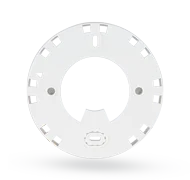
Related products
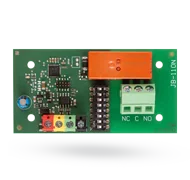
JB-110N
Bus PG power output module
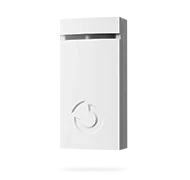
JA-111TH
Bus temperature detector
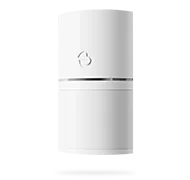
JA-112P
Bus PIR motion detector
JA-110P
Bus PIR motion detector
JA-110P PET
Bus PIR motion detector with basic pet immunity
JA-115P
Bus ceiling PIR motion detector
JA-122PW
Bus dual PIR and MW motion detector
JA-122PB
Bus combined PIR motion and glass break detector
JA-122PC
Bus combined PIR motion detector with 90° photoverification camera
JA-120PC (90)
Bus PIR motion detector with 90° photo-verification camera
JA-120PC
Bus PIR Motion Detector with Camera
JA-111M
Mini bus magnetic detector
Help us improve the catalog
Missing something, or found a mistake? Let us know.