LD-12
Flood detector
Catching the risk of a water leak in a cellar or a bathroom.
Key specifications
- Power
- 12 V DC (9 – 15 V)
- - Nominal consuption – to calculate backup
- 0.6 mA
- - Maximal consuption – for cable selection
- 0.6 mA
- Operational temperature range
- -10 to +40 °C
- Complies with
- EN 50130-4, EN 55022
Basic description
Flooding can do a great deal of damage in a home. When a hose bursts or a seal fails and the water reaches the electrodes, the detector registers it. Once it is connected to the alarm, the system can send a message about the flooding, so that you can act in time.
- The option of passing the information on to the alarm so that a message is sent
- For indoor areas
- It reports flooding and the return to dry conditions as well
Why choose this product
Where the detector can be used
The detector reacts to water that connects its electrodes. When the water is gone, it returns to the idle state by itself, so the alarm can tell when the flooding is over as well.
- Cellars
- Bathrooms
Frequently asked questions
Water connects the detection electrodes and the detector switches the signalling over. Once it has dried out, the state returns, so the control unit input can tell when the flooding is over as well. That says nothing about the leak having been repaired, though.
To a wired input of a security control unit or a GSM dialler. The manual shows a balanced loop for Oasis and an NC loop for Profi; with any other input, go by its electrical wiring.
The LD-12 has its own 12 V power supply and two signalling wires. The LD-81 has no source of its own and takes its energy from the module it is connected to; the technical values are not carried over between the two models.
Technical specifications
- Power
- 12 V DC (9 – 15 V)
- - Nominal consuption – to calculate backup
- 0.6 mA
- - Maximal consuption – for cable selection
- 0.6 mA
- Operational temperature range
- -10 to +40 °C
- Complies with
- EN 50130-4, EN 55022
Warning
- During flooding the green wire is connected to GND and the yellow one is disconnected from GND; once it has dried out, the state is the opposite. In the wiring for both Oasis and Profi, the yellow wire is used and the green one remains unused. Choose the wiring according to the electrical type of the particular input, not on the assumption that the detector suits every input. The detector is intended for the indoor – general environment, −10 to +40 °C. The nominal and the maximum consumption are both 0.6 mA, and the maximum switching current is 200 mA.
Installation example
Always connect it with the system power completely off.
Place the detector so that water in the place being monitored will connect its electrodes.
Connect the red wire to +12 V and the black one to GND.
Connect the signalling wire to a wired input according to the diagram for Oasis (balanced loop) or Profi (NC loop); the yellow wire is used in both diagrams.
Verify the reaction of the input by connecting the electrodes.
Related products
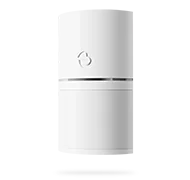
JA-152P
Wireless PIR motion detector
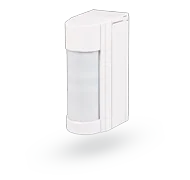
JA-159P
Wireless outdoor PIR detector
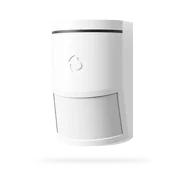
JA-161PW
Wireless PIR and MW combined detector
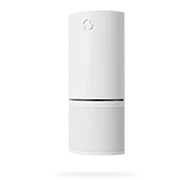
JA-162PW
Wireless dual PIR and MW motion detector
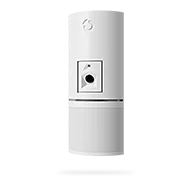
JA-162PC
Wireless PIR motion detector with a 90° verification camera
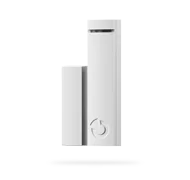
JA-153M
Wireless magnetic detector with recognition of external magnetic fields
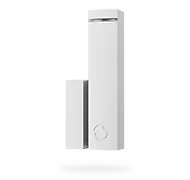
JA-150M
Wireless magnetic detector with 2 universal inputs
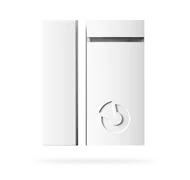
JA-155M
Wireless mini magnetic detector
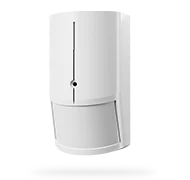
JA-180PB
Wireless PIR and glass-break combined detector
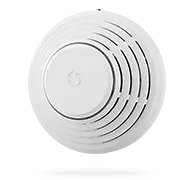
JA-150ST
Wireless fire and temperature detector
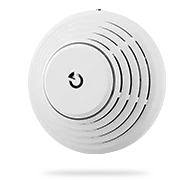
JA-151ST
Wireless combined smoke and heat detector with built-in siren
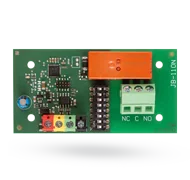
JB-110N
Bus PG power output module
Help us improve the catalog
Missing something, or found a mistake? Let us know.