JA-194Y-LITE
LTE communicator module
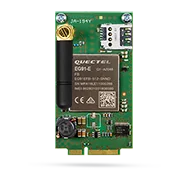
LTE communicator LITE for the control unit. It communicates over the LTE mobile network. It reports alarms to the Alarm Receiving Centre and allows control from the application and remote configuration in the F-Link software.
Product line
- JABLOTRON 100+
- JABLOTRON Mercury
Compatibility
JA-103K, JA-107K, JA-108K, JA-102K
Check compatibilityKey specifications
- Module power supply
- 8–15V DC (from the control panel)
- Average current consumption
- approx. 9 mA (depends on the GSM signal strength)
- Peak current consumption
- 720 mA
- 2G (GSM, EDGE)
- 900 / 1800 MHz
- 4G (LTE)
- 800 (B20) / 900 (B8) / 1800 (B3) MHz 2100 (B1) / 2600 (B7) MHz
- I&HAS classification
- Security grade 3 / Environmental class II (according to EN 50131-1)
- Dimensions
- 70 x 37 x 25 mm
Basic description
With this trio, the deciding factors are the generation of mobile network the communicator is to use and the range of services. The JA-192Y connects to the GSM network, the JA-194Y and JA-194Y-LITE to the LTE network. The JA-192Y and JA-194Y also deliver alarm SMS and voice messages.
- Provides the connection between the control unit and the Alarm Receiving Centre and allows control from the application and remote configuration in the F-Link software.
- Powered from the control unit and connects to the mobile network via a SIM card.
- Connects to the LTE mobile network.
- Complies with security grade 3 and environmental class II according to EN 50131-1; this applies only in combination with a control unit certified for security grade 3.
Why choose this product
What the module provides and how it is configured
The control unit reports alarms using a digital protocol over the mobile network; the communicator works as an expansion module of the control unit and is configured in the F-Link software.
- It transmits data using the JABLO IP or ANSI SIA DC-09 protocol over the mobile network; it supports the DP3 dual path only together with the control unit's LAN communicator.
- It passes a message from the control unit on immediately; it does not store events to send them later.
- In border areas, a fluctuating signal can cause roaming and a significant increase in communication costs; this is solved by having the operator block roaming on the SIM card.
What the control unit needs
Plugs directly into the dedicated connector on the control unit board and is configured in the F-Link software; during configuration, the control unit should be in Service mode.
- The compatibility overview on the website confirms which control units the module works with.
- Requires an activated nano SIM card with data services and with the PIN request disabled; a contract SIM card is recommended.
- The nominal current draw is approximately 9 mA depending on signal strength, maximum 720 mA.
Where it is installed
It is inserted into the connector on the control unit board and fastened to the board with two screws; before mounting, completely disconnect the mains power supply, the USB cable and the rechargeable battery.
- The antenna is supplied, screws into the SMA connector and must be connected before you put the module into operation.
- Powered from the control unit at 8 to 15 V DC.
- Network registration is confirmed when the red GSM LED on the control unit board goes out, usually within 1 minute.
Frequently asked questions
Yes, this communicator works on the LTE network.
The connection between the control unit and the Alarm Receiving Centre, control from the application and remote configuration in the F-Link software.
Technical specifications
- Module power supply
- 8–15V DC (from the control panel)
- Average current consumption
- approx. 9 mA (depends on the GSM signal strength)
- Peak current consumption
- 720 mA
- 2G (GSM, EDGE)
- 900 / 1800 MHz
- 4G (LTE)
- 800 (B20) / 900 (B8) / 1800 (B3) MHz 2100 (B1) / 2600 (B7) MHz
- I&HAS classification
- Security grade 3 / Environmental class II (according to EN 50131-1)
- Dimensions
- 70 x 37 x 25 mm
- Weight
- 23 g
- Operational environment
- indoor general
- Operational temperature
- -10 °C to 40 °C
- Average operational humidity
- 75 % RH, non-condensing
- Compatible with RCT (ARC receiver)
- according to communication protocols
- SPT communicator type
- SPT type Z (control panel expansion module)
- AS/SPT interface
- Pass-through
- ATS class 1)
- ATS interface / Transmission protocol
- SP3 - SP5
- GSM-GPRS (IP) — JABLO IP / ANSI SIA DC-09
- DP3 2)
- LAN (IP) / GSM-GPRS (IP) — JABLO IP / ANSI SIA DC-09
- Certification body
- Trezor Test s.r.o. (No. 3025), Kiwa Nederland b. v.
- In compliance with
- EN 50130-4, EN 55032, ETSI EN 301 489-1, ETSI EN 301 489-7, EN IEC 62368-1, ETSI EN 301 511, ETSI EN 301 908-1, EN IEC 63000, EN 50131-1, EN 50131-3, EN 50131-10, T 031
- Can be operated according to
- CEPT/ECC/DEC/(04)06, ERC/DEC/(97)02, ECC/DEC/(06)01
Warning
- If you want to establish a dual path, this communicator and a Wi-Fi WAN network cannot be used at the same time; both count as a radio path.
Installation example
Prepare an activated nano SIM card with data services and with the PIN request disabled; a contract SIM card is recommended.
Disconnect the control unit from its power supply: the mains, the USB cable and the rechargeable battery.
Insert the SIM card into the holder in the communicator.
Insert the communicator into the connector on the control unit board and fasten it with two screws.
Screw the antenna into the SMA connector; the module must not be in operation without it.
Switch on the power, first the battery, then the mains, and wait for network registration.
Close the control unit cover.
In Service mode, set the communicator properties in the F-Link software.
Accessories
Related products
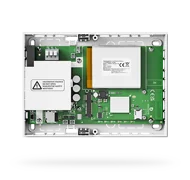
JA-152KRY
Mercury control panel JA-152KRY
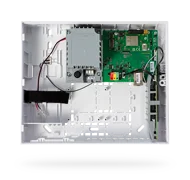
JA-102KRY
Mercury control panel JA-102KRY
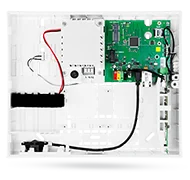
JA-103KR
Control panel JA-103KR
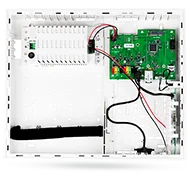
JA-107KR
Control panel JA-107KR
JA-194Y
LTE communicator module
JA-103K
Control panel JA-103K
JA-107K
Control panel JA-107K
JA-108K
Control panel JA-108K
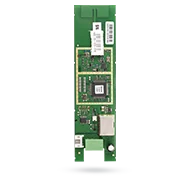
JA-111R
Bus interface for JA-100 wireless devices
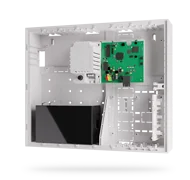
JA-103K-7AH
Control panel JA-103K-7AH
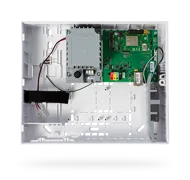
JA-102KY
Mercury control panel JA-102KY
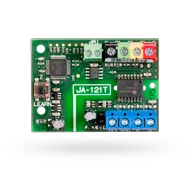
JA-121T
RS-485 bus interface
Help us improve the catalog
Missing something, or found a mistake? Let us know.